
She Fights, Too! A history of the Lethal, Lovely, and Legendary
Women in fighting games have worn a ton of hats over the years. From Chun-Li’s work with Interpol to Ladiva’s theatrical wrestling, the range is insanely large. Across decades and franchises, we’ve seen almost any kind of woman you could imagine: delicate but lethal, muscular powerhouses, damsels needing rescue, potentially world-ending antagonists, and everything in between. This Women’s History Month, CFGC wants to celebrate these lovely characters who built this genre and the representation they gave us. The art pulled for these lovely ladies are linked to their respective wikis. To stay consistent, we went with concept art that came out around the time of their debut appearance.
Breaking into the Scene
When fighting games and the games that would form their foundation were first developed, women were rarely if ever included. Whether good or evil, having ladies as aggressors in a genre built upon physical violence was controversial to many. Developers worried about public perceptions of women fighting and getting fought. While women started to be featured early into the genre’s mainstream appeal, getting women right was another concern. Those that first made it were truly setting the pace for those who would come after.

Poison | Final Fight + Street Fighter | NPC in 1989, Playable 2012
While some may not consider her first appearance as being in a “true” fighting game, Poison was one of the first ladies in a game that centered around physical combat. Her story started with a bit of a lore mismatch thanks to localization; in some markets, she was dubbed a transgender woman. In others, she was cisgender. While many speculate that this change was done to alleviate some people’s worries about games showing harm towards women, it was an uncomfortable workaround that many members of the LGBTQIA+ community may have felt harmed by. She grew out of her role as an antagonist, then to Hugo’s manager, and finally to a playable character in her own right. The canon acceptance of her identity has made her a character that many love and relate to.
Chun-Li | Street Fighter | 1991
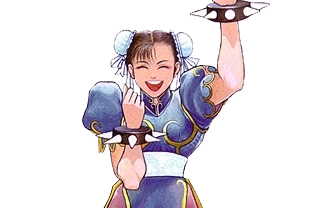
Chun-Li, is usually thought of as the female fighting game character. It’s not only that she was the first playable lady, but also because of how often she appears in her series. SFII Chun-Li was full of girly mannerisms that made her seem approachable. Her win animations were cute and enthusiasi, her costume took notes from traditional Chinese garments, but were modified to accommodate her lightning-fast kicks. Her fighting style was built off of sheer physical prowess and agility. Rather than being a lone damsel in distress, she’s out to get justice.
Lovely But Lethal
Once women were established as contenders in fighting games, there was an astonishing boom of new female characters coming out. Unfortunately, for a while, the mold was rather stiff. These next-gen characters focused heavily on the femme-fatale trope. Think flirty, dangerous, but ultimately beautiful. There were definite exceptions to this rule, but many of the icons from this era of fighting games

Mai Shiranui | Fatal Fury + King of Fighters | 1992
Mai is the blueprint for the femme fatales of this era. Her scandalous design, feminine animations, flirty personality, and suggestive voicelines made her appeal the first thing most of her players and opponents would notice. While she’s strong and capable, how she acts leads people to ignore how lethal she can be. The long-term partner of Andy Bogard, she’s loyal yet playful. She toys with her opponents. Below the surface, you’ll find a kunoichi using a flashy flames-and-fans fighting style. She’s still one of SNK’s most recognizable characters aside from Terry Bogard. Despite her having reached icon status, modern discussions around her character focus around the difference between what she could be and how she’s mostly presented as.
King | Art of Fighting + King of Fighters | 1992
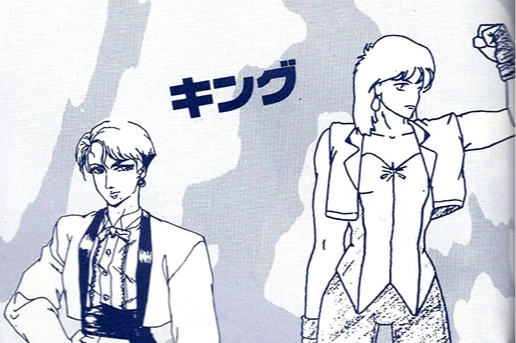
Originally presented as a man, King acted as a bouncer in South Town before her real identity got revealed. Her Muay Thai techniques are almost unrivaled, letting her perform her job well. Her design helped introduce a lot of folks to the concept of gender performance, which much of genre had yet to talk about. Her outfits stayed consistent, but her accessories and makeup have gotten more femme-presenting as the years went on.
Sonya Blade | Mortal Kombat | 1992
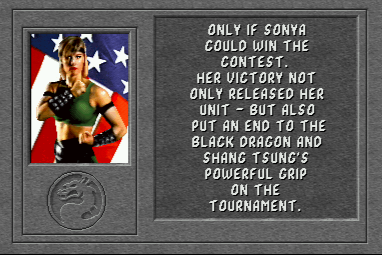
The first military-trained woman to hit the genre, Sonya remained a bit romanticized. Sonya was beautiful but painfully headstrong. Her dedication to her role in the Special Forces was core to her character. She wasn’t included in the game solely as a prize to be won, but she did end up being taken prisoner in her first appearance. Her being captured was a bit different than a sudden pitfall, though. It came following her entering a tournament for the fate of her unit. Working together with Johnny Cage despite their differing outlooks, she fought for her squad to no avail. Following capture and return to “regular” life, she continued to hold strong to her values and duties to the United States.
Kitana | Mortal Kombat | 1993
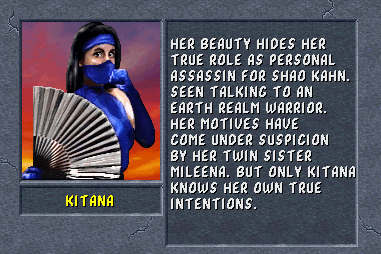
Thousands of years old despite her youthful appearance, Kitana spent much of her life as an assassin for her adoptive father, Shao Khan. Her journey to independence and freedom in what she does was a slow burn over the course of multiple games. As time went on, she went from a loyal blade to a sworn enemy of Shao Khan, giving us both a portrayal of She also employs the use of fans, similar to Mai Shiranui (minus the flames). Her movements are quick but lethal, and her combos have been keeping players juggled since her first showing in 1993.

Cammy White | Street Fighter | 1993
Cammy is originally portrayed as “Killer Bee” one of Street Fighter antagonist M. Bison’s “dolls,” which act as a brainwashed puppet/body for him to take over, should he need to. She has no memories, As the series progressed, she gained more independence, breaking free of M. Bison and Shadaloo to become an Delta Red member, where she would continue carrying on special missions. She cares deeply for those that she’s close to, but is ruthless when in the face of evil. She hates Shadaloo and those who associate with it, but holds a soft spot for the other dolls. Despite her disciplined personality, she often has having a soft side when it comes to animals as well.
Sarah Bryant and Pai Chan | Virtua Fighter | 1993
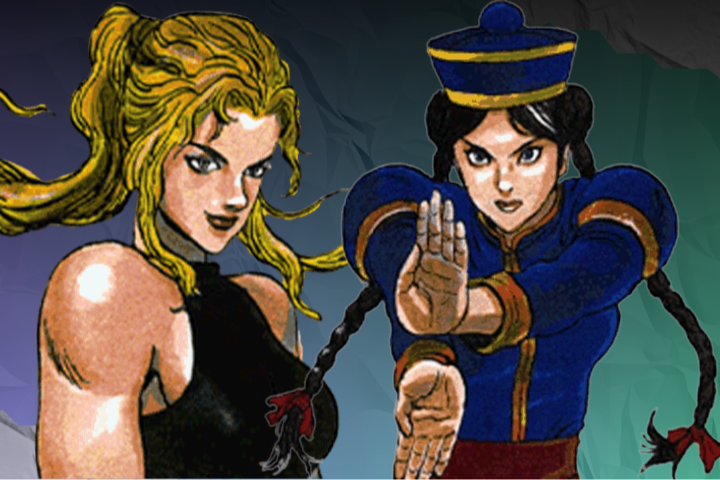
These two were the first female characters in any 3D Fighting game, giving them a special kind of first for themselves. Sarah falls into the tragic backstory of being kidnapped, brainwashed, and recovering into her new sense of self through fighting like Cammy. Pai follows a more unorthodox path, being an actress in Hong Kong that joins and leaves the world of fighting on multiple occasions. While some of the lore they have is not the newest, freshest concept, the novelty of their existence in that third dimension really helps pave the way for ladies down the line.
The REcovery Era
Rosters in fighting games kept expanding with new mechanics, deeper lore, and a greater list of character archetypes. Fanservice was still at the forefront of some designs, but many newcomers had more dimension to their backstories. Unfortunately, a lot of the kidnapping tropes continued, but there was a lot more done with how these characters recover into their regular

Yuri Sakazaki | Art of Fighting + King of Fighters | 1994
Yuri was originally just another NPC that got kidnapped. She got rescued by her older brother, Ryo. When she finally reached the point of having her own roster slot, she was an enthusiastic fighter. Yuri became the first female practitioner of Kyokugenryu Karate. Unfortunately, what she learned only granted her access to the more foundational moves of the practice. Over time, she learned to adopt moves from other fighters and make them fit into her move pool. Her adaptability and uplifting yet naive view of life set her aside from a lot of other characters.

Morrigan Aensland | Darkstalkers | 1994
Morrigan is the embodiment of what people think of when they think “succubus.” As one of the most sexualized characters in the genre, she plays the part well. Despite being an anti-hero, she is one of the main protagonists Darkstalkers of What catches many people off guard about her though, is that she’s not particularly evil. She’s generally viewed as carefree, disinterested in her responsibilities to her people despite being a high demon noble. That aloof nature clashes with a lot of the other women in fighting games, since they are usually perceived as dutiful and responsible. She’s considered the face of the Darkstalkers franchise, and to some, the FGC as a whole.

Nina Williams | Tekken | 1994
Nina is one of the original Tekken Characters, giving her a lot of lore to live through. She’s a cold-blooded killer, kept in cryogenic sleep, and experimented on by the Mishima Zaibatsu following her failed assassination attempt. Nina is competent and serious about her craft, asking less and doing more. Having a long-running sibling rivalry with Anna, who also works as a hired gun, keeps her on her toes. The two are constantly at each other’s throats, going well beyond a regular sibling rivalry and nearly killing each other on a few occasions. Her morality is questionable, often doing things that would go against regular social standards, even taking a hit order against her own son. He can be one of the few exceptions to her generally distant attitude.

Jun Kazama | Tekken | 1995
Jun goes against how most of the other fighters let themselves be seen. While many of the others are cold towards others she lets herself feel and show she cares. During her eco-activism, she entered the Tekken Tournament in hopes of meeting Kazuya Mishima, to discourage him from smuggling endangered animals. After they met, Jun believed Kazuya was just misunderstood, giving him a chance which turned into a marriage that produced a son, before they split up. She was assumed to be dead when Jin was only 15 after an attack happened during the second Tekken Tournament, but recently made a return in Tekken 8.
Kasumi | Dead or Alive | 1996
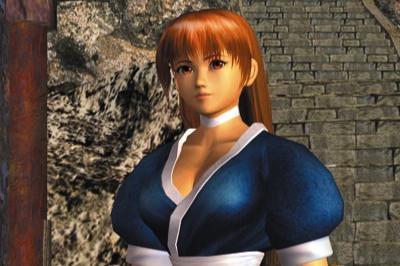
Kasumi set aside the happy sidekick trope by becoming one of the first female leads in fighting games. She was born to the leaders of a clan, pampered her entire childhood and set up for a life of luxury. When tragedy struck, and her uncle ended up as a runaway kunoichi, trying to avenge the attack on her brother. She knew escaping would put a warrant out on her life. She chooses to sign up for the Dead or Alive tournament after she found out that her brother’s attacker was part of it in hopes of plotting her revenge.
Elena | Street Fighter | 1997
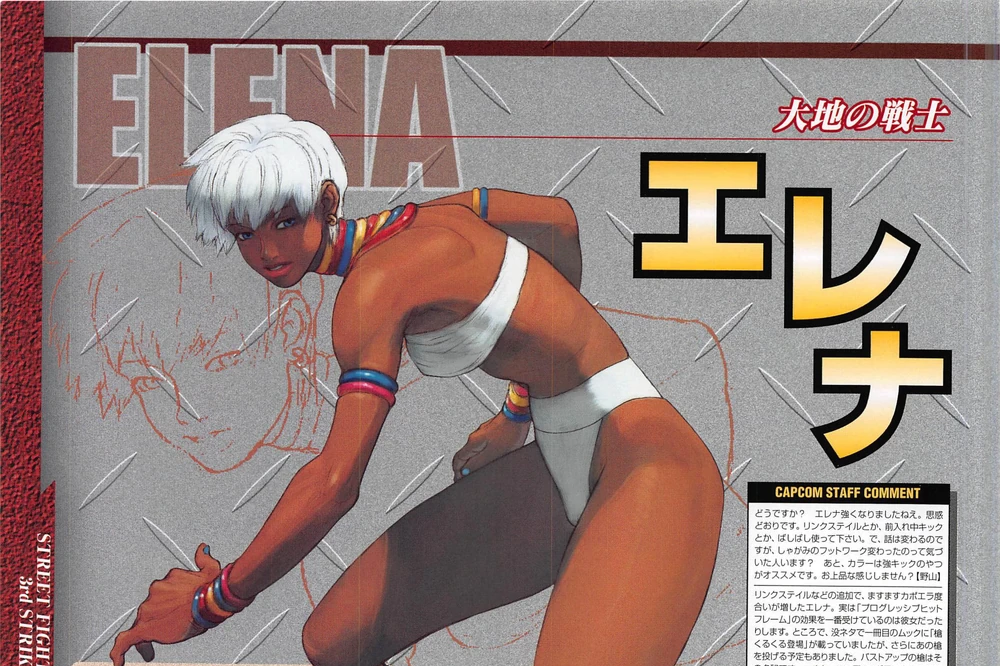
Elena holds a special distinction in that she was one of, if not the first African female characters in a fighting game. She’s a very upbeat and cheery girl, stepping away from the dark and tragic backstories of many others in these games. She is always seeing fighting as an opportunity to befriend others and express herself. She takes a lot of pride in using natural talent and strength to fight. Her height is a great advantage with the flow of capoeira cElena is very well-traveled, studying abroad in Japan and traveling to many other countries in order to learn more about other cultures.

Ling Xiaoyu | Tekken | 1998
Xiaoyu is a very naive kind of girl with simple wants in life. Her dreams and wants are all for the good of others, even sobbing when she thought Heihachi died, despite his wrongdoings. Even more, she joined Tekken Tournament mainly for the purpose of earning funding to start an amusement park of her own. Her childlike outlook and wonder carry over into her main costume designs, where she keeps her hair tied up in twintails throughout every main costume she has had throughout the series.

Ivy Valentine | Soulcalibur | 1998
Ivy is similar to a femme fatale, with her personal philosophy largely rooted in ends over means. She has bonded with a cursed weapon through contact with its shards and is willing to risk anything if it means freedom from her curse. She alleges that killing brings her no pleasure, and that she only does anything to those who deserve such punishment. Her seemingly evil acts, taunting personality, and risqué costumes have landed her as one of the more iconic ladies of the fighting game genre. Her difficult mechanics, high skill floor, and insane aesthetic appeal have landed her squarely as a fan favorite within the Soul Calibur franchise.
The New Archetype Era
These gorgeous ladies took notes from the former generations, but added their own twist to the tropes they followed. Their pasts were often marred by misfortune, but they learned to handle it independently, but more out of vengeance rather than good morality. This era was more about independence and self-agency than traditional gender roles and offered a lot more options for self-expression.

Baiken | Guilty Gear | 2000
Baiken is a wandering samurai has lived through significant tragedy throughout her life. She lost both her family and her friends in the Crusades, leading her to swear her life to getting revenge on the one in charge. She is far from a warm and loving person, jaded from the trauma. Despite it all, she is painfully protective of the people and matters she cares about. Her passion for her people and those they have lost drives her to do absolutely anything it takes for revenge, even if it kills her.

Christie Monteiro | Tekken | 2001
Christie is a practitioner of Capoeira, taught by her grandfather’s student, Eddy. The art of Capoeira came to her pretty naturally, leading her to enter the Tekken Tournament in hopes of raising money to help treat her grandfather’s terminal illness. She only fights with a reasonable goal in mind. She honed her physicality into shockingly strong yet graceful attacks. Outside of the arena, she’s consistently portrayed as being a good-willed person.

Bridget | Guilty Gear | 2002
Bridget is widely known in and out of the FGC, for rather unfortunate reasons. She’s been the center of a lot of questioning about her gender identity and expression due to how her lore in the older games was written. In games before Guilty Gear -Strive-, she was written as a boy raised as a girl due to her hometown’s superstition. She vehemently was working to show that she could be a “better man” before coming out as identifying as a woman in the latest installment of the series. Her personality is overwhelmingy whimsical. In battles, she’s always using a yo-yo and teddy bear as her primary weapons, showing us that she really views her fights as a game.

Tira | Soulcalibur | 2005
Tira was the actually evil companion to Ivy’s neutral evil. Not only is she horribly sadistic, she has been noted as “lethally addicted to murdering others.” She also uses a mood-based stance option that gives her totally new options. Her absolute bloodlust and lack of care for human life is a stark jump from most of the other “evil” ladies in fighting games. Brandishing a ring blade over a more traditional sword also gives a different vibe than the rest of the cast.

Emilie (Lili) De Rochefort | Tekken | 2005
Emilie “Lili” de Rochefort leans heavily into the girly girl aesthetic and comes from a very well-off family. On first glance, she might seem to fit the “perfect woman” stereotype, but her snobbish personality shows her looks don’t tell the whole story. She gets caught up in the heat of competition a little bit too much on occasion, when her urge to win eclipses her original intent. She’s painfully loyal to her father and his business, consistently entering the Tekken Tournament for his sake, but any losses that she takes falls on her as a personal shortcoming. Her rivalry with Asuka runs deep, and has yet to have an end in sight.
Breaking the Mold
From 2010 onward, we’re seeing the most diverse representation of women in fighting games to date. We’ll see characters who dedicate their whole lives to revenge, those yearning for world destruction, and body types that we’re yet to have seen. This era really started to show the how deep yet broad women’s experiences can be!

Juri Han | Street Fighter | 2010
Juri falls back to the troubled child stereotype but makes far from a “regular” recovery. When her parents were attacked and murdered, she suffered near-total destruction of her left eye, which got replaced by the Feng-Shui Engine upon her S.I.N. membership. Bent on destroying Shadaloo for the death of her parents, she joined S.I.N. and works to destroy it from the inside. Juri lives for the thrill of fighting and inflicting pain on others, to the point that being rejected for a fight makes her very angry.

Ramlethal Valentine | Guilty Gear | 2014
Ramlethal’s ultimate goal was the destruction of humankind. If that’s not enough to set her apart from many of the other characters in fighting games, we aren’t sure what would. Valentine-type gears unfortunately do not have innate personalities, memories, or conscience. In spite of her desire for destruction, she’s rather softspoken and learns over time how important it is to understand the concept of feelings and caring for others. As of the latest installment of Guilty Gear, she has also started to find sympathy toward humans, marking the grand failure of her initial programming (even if for the best).
Ladiva | Granblue Fantasy Versus | 2020
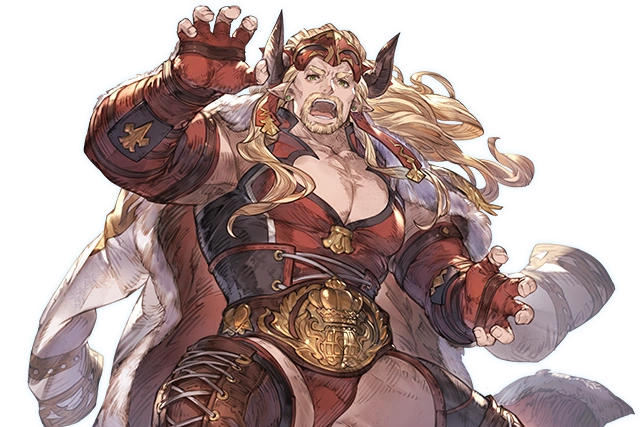
Ladiva is an interesting example of transgender representation that came out in Granblue Fantasy Versus. Her species, the Draph, are known for having very different visual and physical manifestation between sexes. Despite her being much larger and muscular than the average lady Draph, she is happy to embrace her body as it is and Her beard, body shape, and fighting style might make some people assume her identity, but she’s confident in her gender presentation. She’s generally viewed as a very positive, kind, and loving character above all else. Since her release, she’s been a beloved member of the FGC’s LGBTQIA+ representing character body.

Giovanna | Guilty Gear | 2021
Giovanna almost totally secretive about her past, which fits her well considering her current job within the United States Government. She fights with her spirit wolf, Rei, to serve and protect as a United States Special Forces Officer under Goldlewis Dickinson. She normally means well when talking with others, but Giovanna’s reserved manners sometimes make people see her as cold or uncaring. It’s not officially confirmed, but many fans think that she may have some connections with werewolves thanks to her fondness of moongazing and her ability to fuse with Rei in a Guilty Gear spinoff.
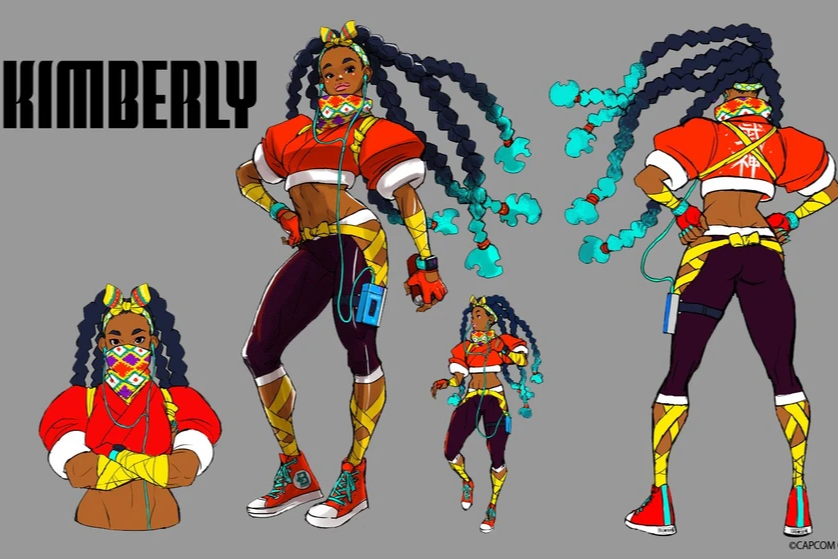
Kimberly Jackson | Street Fighter | 2023
Kimberly our latest Bushinryu Ninjutsu practitioner, taught by Guy. She goes into battle looking to improve her ninja skills, because she thinks it’s cool. Little other reason is provided why she decided on this style of fighting specifically. Unpredictability and speed are her main strengths; she’s always finding new options to try. She loves all things 80s, which is clear when you look at the vivid outfits she wears. Kim considers herself an artist, which is shown off best by her spraycan bombs and love for retro music. She’s had multiple conversations with DeeJay regarding his plans for future albums and stumbled her way into inspiring his new works.
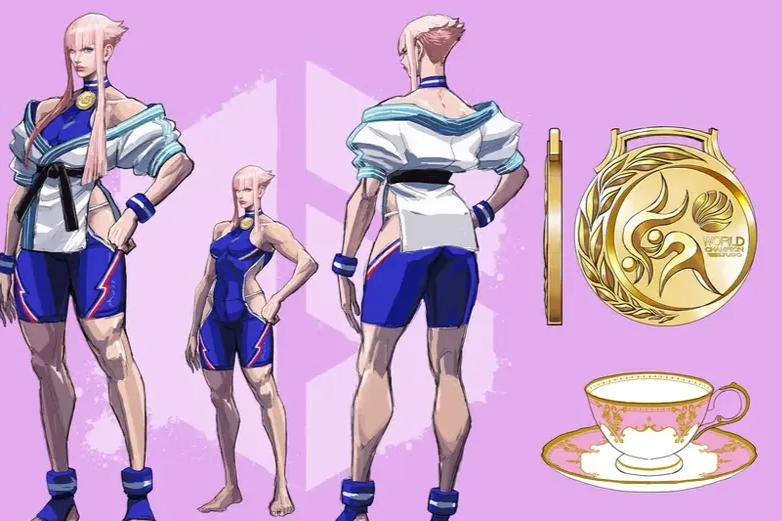
Manon Legrand | Street Fighter | 2023
Manon is a French supermodel who spends her free time dancing and practicing Judo. As odd of a combination as it might seem, she manages to bring it all together in a powerful new way to envision grapplers. She’s peppy, idealistic, and always looking for new ways to work towards being her “best self” in any situation. She’s got a slender build despite being quite muscular, accentuated by her gi over the leotard she wears for ballet. Manon’s fighting style breaks the rules of multiple sports, yet combines them in ways no one might have thought imaginable before.
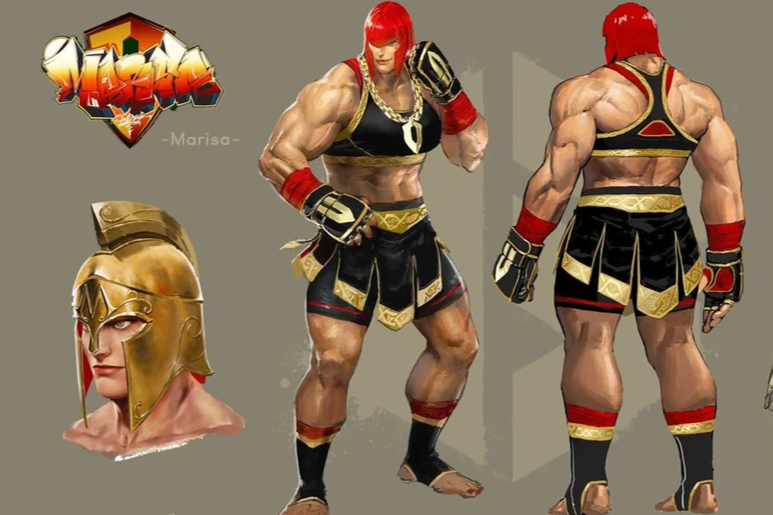
Marisa Rosetti | Street Fighter | 2023
Marisa’s helmet-shaped hair and armor-inspired jewelry set us up for a real warrior. She fights using Pankration, known as Greek combat game like modern MMA. Her hits might not come out fast, but they cause heavy chip damage to Drive Bars and Health Bars alike. Her tall and muscular build lends itself well to combat, striking fear into her opponents. She takes many move names from ancient Greek and Roman weapons. She’s a great sport that actively likes to encourage her opponents, even considering marrying those who give her a real tough fight. As a confirmed bisexual, she has formally proposed to both Manon and Zangief following their combats.
Wrapping UP
If you’ve made it this far, thank you for joining us to celebrate so many of the wonderful women who keep us coming back to their respective games! We understand this list is far from comprehensive, but our goal was to add as many of the notable women and first-of-their-kind femmes of fighting game rosters as possible. Stay tuned this Women’s History Month for an upcoming article on IRL Ladies in Fighting Games, featuring some of our favorite FGC Content Creators, Pros, and Commentators.
